
Last Updated: November 10, 2026
Quick Summary
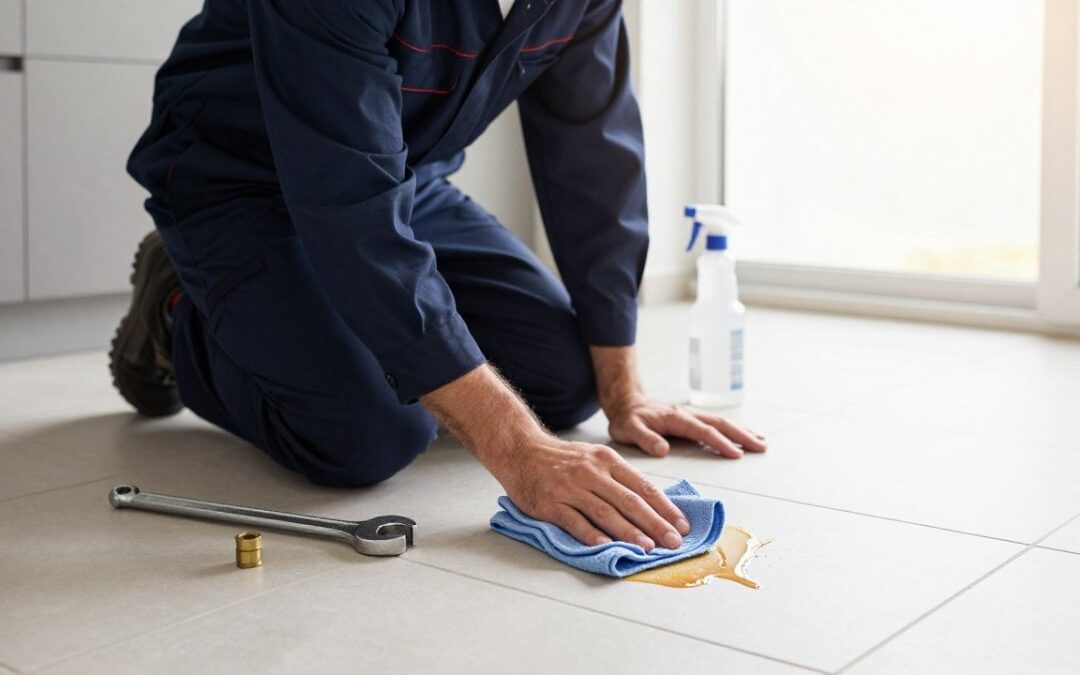
Professional plumbers clean up after a job because leaving the work area as they found it, minus the fault, is part of finishing the job properly. Clean-up usually covers protecting floors, containing water and debris, removing waste and wiping down fixtures. Whether it is included is a scope item, so confirm it before work starts.
- Clean-up usually covers protecting floors, containing debris, removing waste and wiping fixtures.
- Clean-up is a negotiated scope item, not a default entitlement, so ask before booking.
- Moving furniture, disposing of damaged cabinetry and stain removal are often excluded.
- Agree on floor protection and waste removal before the work begins.
- Walk through the area with the plumber and confirm it is clean before paying.
Table of Contents
- What Clean-Up Means on a Plumbing Job
- How Professional Drain Cleaning Works and Where the Mess Comes From
- Do Plumbers Clean Up After Themselves?
- What to Expect When a Plumber Visits
- Protecting and Restoring the Work Area Step by Step
- Exceptions, Safety and Hazardous Waste
- Booking a Plumber Who Leaves Your Home Clean
- Frequently Asked Questions
What Clean-Up Means on a Plumbing Job
Clean-up on a plumbing job means leaving the work area as you found it, minus the fault you were called to fix, which is what professional plumbers clean up as a matter of course. For most homeowners in Perth’s northern suburbs, that covers the floor, the cabinet, the surrounding fixtures and the disposal of anything removed.
Clean-up usually includes:
- Protecting floors and walls before work starts
- Containing water, sludge and debris during the job
- Removing waste, packaging and old parts
- Wiping down fixtures and checking that nothing is left behind
Watch out: A job can be technically finished while the bathroom is still a mess. Ask what the clean-up covers before the work starts, not after.
How Professional Drain Cleaning Works and Where the Mess Comes From
Most drain clearing involves pushing a cable or auger into the line, or using high-pressure water to break up the blockage. The process can bring grease, soap scum, hair, food particles and other debris back up through an access point. That is why drain work is one of the messier jobs a plumber does.
A plumber may use a video camera inspection first to find the blockage’s location. They then clear it using a drain snake or hydro jetting. Access usually comes through a cleanout or a removed trap. Each step can release residue onto the floor or the outside of the fitting, so the mess often appears during the work rather than after it.
If you want to understand why the job creates debris, professional drain cleaning explains how the process works. Learn about the benefits of professional drain cleaning. The mess is a normal part of clearing a blockage, but a good plumber plans for it. Book a blocked drain service in Perth when you are ready.
Do Plumbers Clean Up After Themselves?
Many professional plumbers do clean up after themselves, but the standard is not universal. The practical answer is that clean-up is a negotiated scope item, not a default legal entitlement. Some businesses treat the blockage as the job and leave the surrounding mess for the homeowner. Others see tidying the work area as part of finishing the job properly, and price it into the call.
A clear answer depends on the business, so ask directly and get the answer in writing if it matters to you. At A2Z Plumbing, we leave properties clean and tidy, but a homeowner should always confirm the expected clean-up before booking.
What Clean-Up Normally Includes
For a routine drain or repair job, normal clean-up usually covers:
- Laying floor protection before tools come out
- Containing water, sludge and debris at the access point
- Bagging waste, packaging and old parts
- Wiping down fixtures, traps and surrounding surfaces
- A final visual check for leaks and leftover debris
What it often does not cover: moving heavy furniture or stored items, disposing of damaged cabinetry or building materials, stain removal from porous surfaces, or remediation of sewage contamination. Those are separate tasks with separate costs.
Who Does What
The split is usually straightforward once it is stated:
- Plumber: protect surfaces, contain the mess, remove trade waste, wipe down, test and walk through.
- Homeowner: clear access, move belongings, secure pets and children, and arrange disposal of any damaged materials the plumber has removed but not carted away.
A common pattern is for the plumber to bag waste and leave it on site unless removal is agreed. Confirm whether removal from the property is included or whether the bags stay in your bin.
How to Verify the Job Is Complete
Before the plumber leaves, run a short checklist:
- No visible debris on floors, in cabinets or around the trap
- No leaks at fittings after the water is run
- Water flow restored and draining normally
- Waste and old parts accounted for
- A clear statement of what was done and what was excluded
Watch out: a job can be technically finished while the bathroom is still a mess, so agree the clean-up scope before work starts rather than disputing it at the end.
What to Expect When a Plumber Visits
A plumber visit usually starts with a short check of the problem, then the repair or clearing work, then a clean-up and a final walkthrough. Read a summary of common reasons to call a plumber. Expect the plumber to:
- Confirm the problem and explain what caused it
- Give a quote before starting extra work
- Protect the floors and nearby surfaces
- Show you the result before leaving
Agreeing Cleanup Expectations Before Work Begins
Agree on clean-up before the work starts, so there are no surprises at the end. Ask the plumber to cover these points:
- Will they protect the floors and walls?
- Will they remove waste and old parts from the property?
- Will they wipe down the area and check for leaks?
- Who is responsible for any stains or damage left behind?
A short conversation at the start saves a lot of frustration later.
Protecting and Restoring the Work Area Step by Step
Protecting and restoring the work area is simple if you follow a clear order. Here is a practical sequence that a homeowner can check with the plumber:
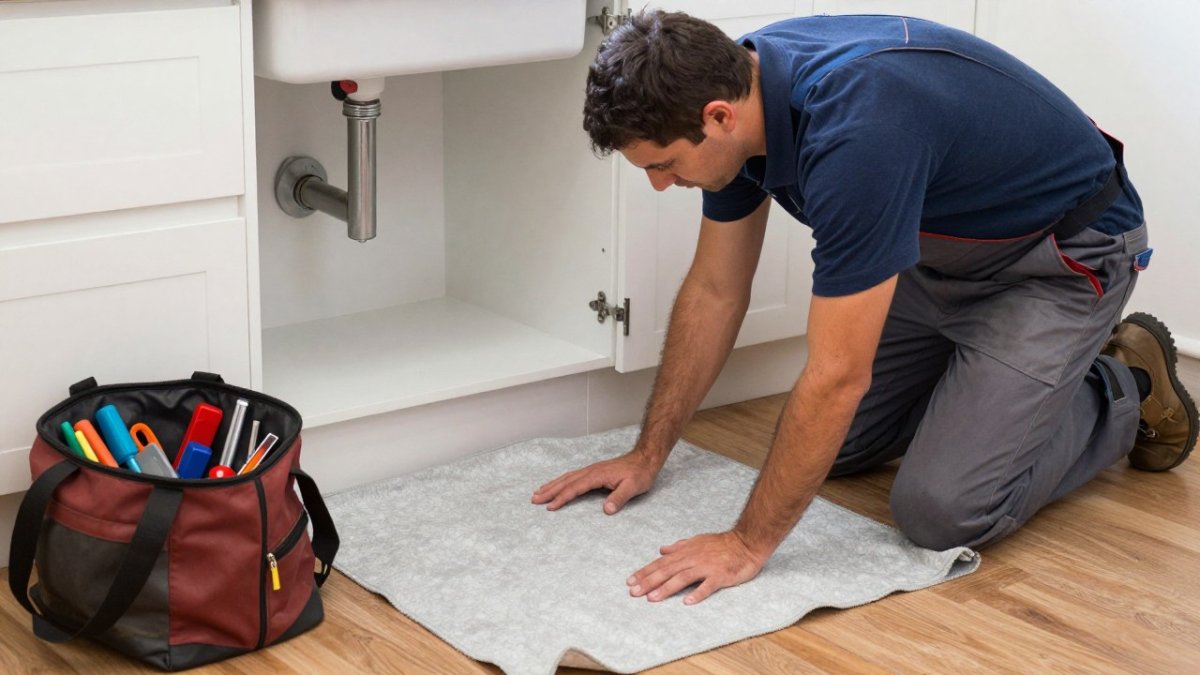
- Cover the floor. Lay drop cloths or old towels over the floor and any nearby cabinets.
- Clear the space. Move rugs, bins and small items out of the way.
- Contain the mess. Place a bucket or tray under the trap or fitting before opening it.
- Finish the job. Test the fix, check for leaks and tighten any fittings.
- Clean up. Bag the waste, wipe the surfaces and remove the covers.
- Walk through. Look at the area together and confirm it is clean before you pay.
Restoring the area is the step most people skip. Take five minutes to walk through it with the plumber.
The steps below show how a plumber protects and restores the work area, and what to check before paying.
| Step | What to do | Timing |
|---|---|---|
| Cover the floor | Lay drop cloths or old towels over the floor and nearby cabinets | Before work starts |
| Clear the space | Move rugs, bins and small items out of the way | Before work starts |
| Contain the mess | Place a bucket or tray under the trap or fitting | Before opening the fitting |
| Finish the job | Test the fix, check for leaks and tighten fittings | After repair |
| Clean up | Bag the waste, wipe surfaces and remove covers | After repair |
| Walk through | Look at the area together and confirm it is clean | Before paying |
Exceptions, Safety and Hazardous Waste
Not every job suits a quick clean-up. Routine drain and repair work can usually be tidied with drop cloths, a bucket and a bin bag. Some jobs cross into specialised remediation, and the clean-up standard changes accordingly.
Jobs That Fall Outside Routine Clean-Up
- Sewage backups and contaminated water. Category 3 water carries pathogens and needs disinfection, not just mopping. Ask whether the plumber handles remediation or refers it to a specialist.
- Mould and long-standing damp. Visible mould after a leak usually needs a remediation protocol, not a wipe-down.
- Asbestos-containing materials. Older pipe lagging, sheeting and some floor coverings can contain asbestos. Work on these materials should be handled by a licensed asbestos removalist.
- Major demolition or cabinet removal. If the fix requires cutting out cabinetry or flooring, disposal and reinstatement are separate scopes.
- Chemical drain cleaners. Caustic and acidic products can remain in the line and pose a risk to the plumber opening the fitting. Tell the plumber what has been poured down the drain.
Licensing and Safety
Gas work should be done by a licensed gas fitter, and you should never let an unlicensed person work on gas lines. Follow the steps to verify a gas fitter licence. You can check a tradesperson’s licence before the job starts, and ask the plumber for their licence number. If you are unsure whether a plumber is licensed, ask for the licence number and verify it.
Handling Hazardous Waste
Sewage, chemical cleaners and asbestos-containing materials need careful handling. Keep children and pets away from the work area, and ask the plumber how they will dispose of hazardous waste. Do not try to clear a blockage with strong chemicals without checking first, because mixing products can be dangerous.
Watch out: if the mess involves sewage, mould or suspected asbestos, treat it as a remediation job rather than a routine clean-up and confirm who is licensed to handle it before work begins.
Booking a Plumber Who Leaves Your Home Clean
When you book a plumber, ask about clean-up before the visit. Confirm the expected standard, the protection they will use and how they will finish the job. A reliable plumber will answer these questions without hesitation.
A2Z Plumbing is a family-owned business with an unrestricted plumbing contractor’s licence and a high-level gas fitter’s licence. Compare commercial plumbing options in Joondalup before you book. We offer courtesy calls before arrival, no call-out fees during office hours, and 24/7 emergency availability. Call us today on 0421 799 060 to book a clean, reliable visit.
Frequently Asked Questions
Do professional plumbers clean up after themselves?
Most professional plumbers clean up the immediate mess from their work, such as wiping down fixtures, bagging removed debris, and sweeping the area around an access point. Cleanup is usually part of a properly run job, but it is not always defined in a quote. Ask before work starts what the cleanup includes, and confirm the work area is left as you expect at the final walkthrough.
Why do plumbers clean up after a job?
Plumbers clean up because drain work often releases grease, hair, food particles and standing water into the area around a cleanout or fixture. Leaving that behind creates hygiene risks and damages floors and cabinetry. Clearing the work area also means the homeowner can use the space straight away and can confirm the blockage is actually gone.
What should I do if a plumber leaves a mess?
Take photos of the mess before the plumber leaves if possible, then contact the business and describe what was left behind. Ask the plumber whether they will return to finish cleanup, and on what terms, when the issue falls within the agreed scope. Keep your original quote or job sheet, as it sets out what cleanup was expected.
Should I clean the work area before the plumber arrives?
Clear the area around the affected drain, fixture or cleanout so the plumber can reach it quickly. Move rugs, cleaning products and personal items, and cover nearby floors if you can. Clearing the space helps the job run faster and reduces the chance of accidental damage or spills.
