
Quick Summary
Commercial plumbing maintenance is the ongoing care of water, drainage, hot water and gas systems in business premises. A sound program combines scheduled planned checks with a clear process for urgent reactive call-outs, backed by written records.
- Hot water units, drains and stormwater pits are typically checked every 6 to 12 months.
- Most commercial sites benefit from a formal plumbing inspection at least once a year.
- Access difficulty is often the largest cost driver and is easily underestimated in phone quotes.
- Gas work must be done by a licensed gas fitter, and a plumbing licence does not cover it.
- Keep an asset register and inspection records to support budgeting and compliance.
Table of Contents
- What Commercial Plumbing Maintenance Covers
- Building a Commercial Plumbing Maintenance Plan
- What Commercial Plumbing Inspections Should Check
- Commercial Plumbing Repairs: Cost Drivers and Budgeting
- When You Need an Emergency Commercial Plumber
- Compliance Obligations for Western Australian Business Premises
- Booking Your First Commercial Maintenance Visit With A2Z Plumbing
- Frequently Asked Questions
What Commercial Plumbing Maintenance Covers
Last Updated: November 14, 2026
Commercial plumbing maintenance is the ongoing care of the water, drainage, hot water and gas systems in business premises, from offices and shopfronts to strata complexes and industrial buildings. A2Z Plumbing works across Perth’s northern suburbs, and this guide helps property managers and business owners understand what a maintenance program should cover.
Planned and reactive maintenance compared
Planned maintenance means scheduled checks and servicing before something fails; reactive maintenance means responding to a fault that has already caused a problem, such as a blocked toilet or a leaking hot water unit.
Plan the routine work and keep a clear process for urgent call-outs. Planned work covers inspections, cleaning, valve checks and component replacement on a known timetable; reactive work covers burst pipes, drain overflows and gas appliance faults needing same-day attention.
Drainage, hot water and gas fitting in business premises
Commercial sites place heavier demands on plumbing than most homes. For blocked or slow commercial drains, you can read about professional drain cleaning services and what the job involves. Gas fitting in commercial buildings must meet the requirements of licensed work, so any gas appliance installation, repair or relocation should be carried out by a licensed gas fitter (Gas safety at home).
Good maintenance records make these systems easier to manage, showing which unit is serviced, when it was last inspected and what needs attention next.
Building a Commercial Plumbing Maintenance Plan
A maintenance plan turns scattered repairs into a predictable program, setting out which assets are covered, how often each is checked and how quickly faults are attended to. Putting the plan in writing reduces disputes and makes budgeting easier.
Preventive schedules by asset and property type
Different assets need different intervals. A retail shop with a single hot water unit has different needs from a three-storey office with multiple amenities or a strata complex with shared drainage and stormwater pits. Build your schedule around the asset and how the building is used.
A practical starting point looks like this:
| Asset | Typical check | Suggested interval |
|---|---|---|
| Hot water units | Temperature, pressure relief valve, sediment | Every 6 to 12 months |
| Grease traps | Cleaning and waste removal | Depends on food volume |
| Drains and stormwater pits | Flow test and clearance | Every 6 to 12 months |
| Gas appliances | Safety and operation check | Annually or per manufacturer |
| Tapware and fixtures | Leaks and wear | During each planned visit |
Treat these intervals as a guide; the right schedule depends on the equipment’s age, usage and any recent faults.
Service-level agreements and response times
A service-level agreement sets out what the provider will do and how quickly. Agree on response times for urgent and routine work, the hours covered, and how quotes and variations are approved.
Ask potential providers how they handle after-hours calls and call-out arrangements before a problem occurs, rather than negotiating during an emergency.
What Commercial Plumbing Inspections Should Check
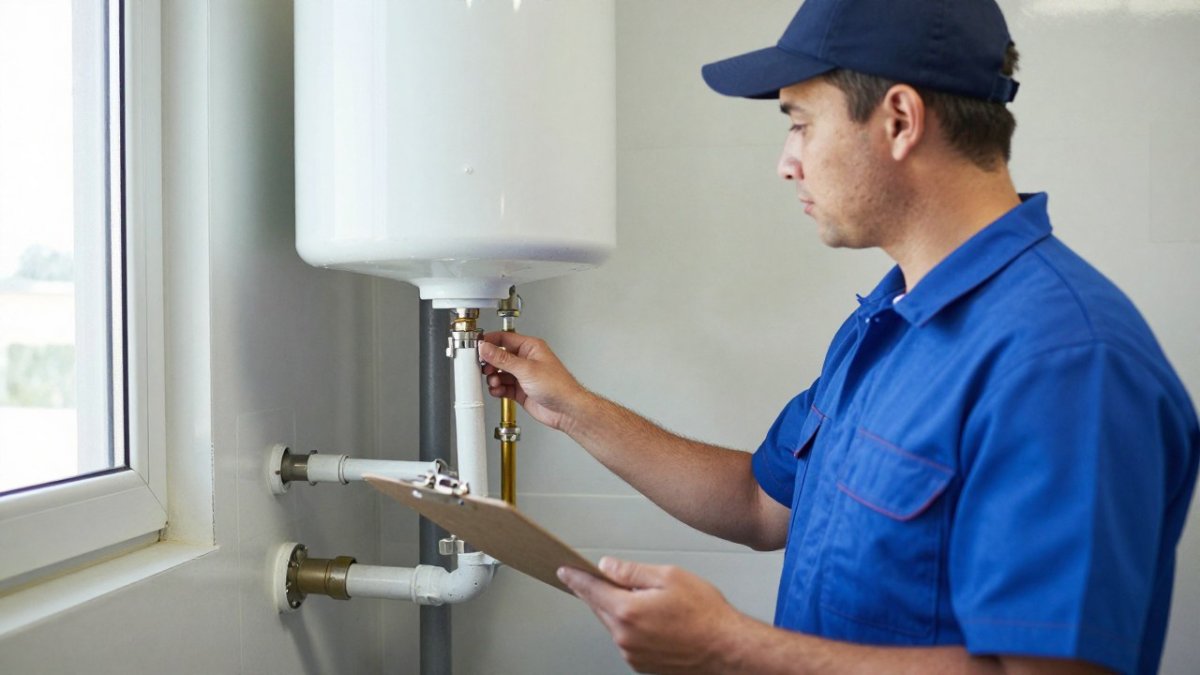
Inspections identify wear, leaks and early warning signs before they become costly failures, covering visible pipework, fixtures, drainage access points, hot water equipment and gas connections. They should also note anything outside the visit’s scope so it can be scheduled separately.
How often inspections should happen
Most commercial sites benefit from a formal inspection at least once a year, with more frequent checks for high-use or high-risk areas such as commercial kitchens and buildings with ageing infrastructure. Sites with frequent blockages or unusual water pressure may need more regular attention until the cause is found.
Schedule checks before peak trading periods so any faults are resolved before they affect customers.
Keeping asset registers and inspection records
An asset register lists every plumbing component on site with its location, installation date, service history and warranty details. Pair it with inspection records noting what was checked, found and done.
Keep the register up to date after each visit; a simple spreadsheet suits many properties, while larger portfolios may benefit from facility management software.
Commercial Plumbing Repairs: Cost Drivers and Budgeting
The cost of a commercial plumbing repair is the sum of several variables a facility manager can learn to read. Understanding them lets you compare quotes fairly, budget realistically and avoid the two most common traps: choosing the cheapest quote and paying again to fix the work, or overpaying for scope you did not need.
The main cost drivers
Access. A leaking tap in an open warehouse is quick to reach; the same leak behind a tiled wall, above a ceiling void or beneath a concrete slab is a different job. To set a realistic budget, review emergency plumber rates in Perth before requesting quotes.
Parts and equipment. Standard tapware and valves are inexpensive; specialist commercial components, large-capacity hot water units, pumps and backflow devices are not.
Timing. After-hours, weekend and public holiday work typically attracts penalty rates.
Scope and variations. A quote based on a phone description may change once the plumber is on site and finds additional faults.
A quote checklist
When you request a quote for commercial plumbing work, ask for the following so you can compare like with like:
- An itemised breakdown of labour, parts and equipment, not just a single total.
- The licence number of the contractor and, for gas work, the gas fitter.
- Whether the price includes making good (for example, patching and painting after access).
- The expected duration and whether after-hours rates apply.
- How variations will be priced and approved.
- What warranty applies to the work and the parts.
- Whether the quote is fixed or an estimate, and what could change it.
Budgeting across a portfolio
A workable budget separates planned maintenance from a repair reserve. Base the planned figure on your inspection schedule and known service intervals; base the repair reserve on asset age and condition and your history of reactive call-outs.
Review both figures annually against inspection records and actual spend. Pricing depends on quantity, access, timing and parts, so a fixed figure for any particular repair would be misleading.
When You Need an Emergency Commercial Plumber
Some plumbing faults cannot wait for the next scheduled visit. Once immediate risks are contained, comprehensive commercial plumbing services can help address the wider maintenance needs that reduce the chance of another urgent fault.
Delaying a leak to the next business day can turn a small repair into water damage to stock, floors and neighbouring tenancies.
A2Z Plumbing offers 24 hours a day, 365 days a year emergency availability, so you can reach a team at any hour.
Compliance Obligations for Western Australian Business Premises
Compliance is where a commercial plumbing maintenance program earns its keep beyond repairs. In Western Australia, plumbing and gas work is regulated, and business owners and property managers carry obligations that extend beyond simply hiring a licensed tradesperson. This section sets out the main frameworks to check, but requirements change and vary by site, so confirm the current rules with the relevant regulator before acting.
Plumbing and gas licensing
Plumbing work in Western Australia must be carried out by a licensed plumbing contractor, and gas work by a licensed gas fitter. If you need urgent gas work, you can learn how to find an emergency gas fitter in Joondalup.
Watch out: an expired or restricted licence is not always obvious from a quote or business card, so verify the number against the regulator’s public register rather than relying on the contractor’s word.
Backflow prevention
Backflow prevention is a specific compliance area that many commercial sites overlook. A backflow prevention device stops contaminated water from flowing back into the potable supply, and certain property types, including many commercial, industrial and multi-tenancy sites, are required to have appropriate devices installed and tested at set intervals. Testing should be carried out by a suitably licensed plumber, and records of testing should be kept on site.
Gas appliance and installation standards
Gas installations in commercial premises must comply with the relevant Australian Standards and the manufacturer’s instructions. Gas appliances require periodic safety checks, and any installation, alteration or repair must be done by a licensed gas fitter who can certify the work. Keep the compliance certificates and service records with your asset register, they are the evidence you will need if an insurer, auditor or purchaser asks.
Workplace health and safety
Under workplace health and safety law in Western Australia, a person conducting a business or undertaking must ensure the workplace is safe and without risks to health. Plumbing assets form part of that duty: a leaking hot water unit near electrical equipment, an unventilated gas appliance, or a blocked drain causing slip hazards are all foreseeable risks.
Fire services and essential safety measures
If your building has fire hose reels, sprinkler systems or other fire-service plumbing, these are typically classed as essential safety measures and must be maintained and tested in accordance with the applicable regulations and Australian Standards. The exact obligations depend on the building classification and the requirements of your local government or building surveyor.
Records that support compliance
A practical compliance file for a commercial site typically includes: contractor licence details, gas compliance certificates, backflow test reports, fire-service maintenance records, inspection reports and a current asset register.
For the current requirements, check the guidance published by the Plumbers Licensing Board and DEMIRS, and confirm any site-specific obligations with your local government and water service provider.
Booking Your First Commercial Maintenance Visit With A2Z Plumbing
A2Z Plumbing is a family-owned and operated business serving domestic and commercial clients across Perth’s northern suburbs. The business holds an unrestricted plumbing contractor’s licence and a high-level gas fitter’s licence, and it is a member of the Master Plumbers Association. Customers can expect courtesy calls before arrival and guaranteed work.
To book a first visit, start by listing the assets on your site and noting any recurring problems. Our local plumbing services in Joondalup cover the commercial work described in this guide. When you are ready to arrange a visit or request a quote, get in touch with the team and describe your premises and what you need.
Frequently Asked Questions
What does commercial plumbing maintenance include?
Commercial plumbing maintenance covers scheduled checks and repairs of the water, drainage, hot water and gas systems in business premises, strata complexes and industrial buildings. Typical work includes inspecting pipework and fixtures for leaks, clearing and testing drains, servicing hot water systems, checking grease traps where a kitchen is present, and recording every visit.
How often should a commercial property have its plumbing inspected?
Inspection frequency depends on the asset and how heavily the building is used. High-use systems such as large-capacity hot water units, grease traps and drainage often justify more frequent checks than fixtures in low-traffic areas. Many facility managers set a planned schedule per asset type and adjust it after each inspection based on what was found.
What should a commercial plumbing maintenance plan cover?
A useful plan lists every plumbing and gas asset on the site, the preventive tasks for each, the frequency of those tasks, who is responsible, and the response times for reactive callouts. It should also set out how work is priced and how records are kept. Asking a provider to confirm these points in writing makes it easier to compare plans and hold a contractor to them.
Can routine plumbing maintenance help prevent emergency repairs?
Yes. Routine inspections catch slow leaks, corroded fittings, failing valves and blocked drains before they cause flooding or system shutdowns. Planned work is usually scheduled at a convenient time and costs less than an after-hours emergency repair, which is why a maintenance plan is often the most economical option for business premises.
Do commercial plumbers provide after-hours emergency services?
Some do. A2Z Plumbing offers 24-hour, 365-day emergency availability, so a burst pipe or failed hot water unit outside business hours can be attended without waiting until morning. Ask any provider to confirm their after-hours call-out arrangements in writing before you need them, so there are no surprises on the invoice.
