
Last Updated: November 1, 2026
Quick Summary
For a plumbing emergency in Wanneroo, the first step is to isolate the water supply at the main valve, usually near the water meter or where the supply enters the house. Water near power or any gas smell calls for immediate action, so call an emergency plumber Wanneroo residents trust, and leave the building first if you smell gas.
- Turn the main isolation valve clockwise until it stops to shut off water.
- Switch off power at the switchboard if water is near power points.
- If you smell gas, leave the building and call for help from a safe distance.
- Ask for a written quote itemising callout, labour and parts before work begins.
- Ask for the repair to be demonstrated and get an invoice before the plumber leaves.
Table of Contents
- Immediate Steps to Take Before an Emergency Plumber Arrives
- Plumbing Emergency Checklist for Wanneroo Homes and Rentals
- Emergency Plumber Cost and the After-Hours Callout Fee
- Emergency Plumbing Call-Out Fee: What Is Included
- What Happens During an Emergency Plumbing Visit
- Booking Your 24/7 Emergency Plumber in Wanneroo Today
- Frequently Asked Questions
Searching for a 24/7 emergency plumber in Wanneroo usually means something has already gone wrong. Water is spreading across a floor, a pipe has split, or the hot water has stopped with no warning. The first question is whether this is an emergency that needs someone tonight or a repair that can wait until morning. The answer usually depends on a few clear signs.
Treat it as an emergency when water is escaping faster than you can contain it, when a burst pipe is flooding a room or ceiling, or when you smell gas. A slow drip under a sink can usually wait until business hours. A ceiling bulge, a water meter that keeps running with every tap closed, or sewage backing up into a bathroom cannot. Leaks near electrical outlets are an emergency too, because water and power together create a real risk of shock.
Gas needs its own rule. A rotten-egg smell, a hissing sound near an appliance, or a gas meter still moving with everything switched off means you should leave the building first and call for help from outside. Do not switch lights on or off, and do not use a phone inside the affected area.
Plumbing problems also escalate. A small leak in a wall cavity can soak timber within days, and a blocked toilet can overflow in minutes. If you are unsure, it is safer to call. Many emergency situations can be assessed over the phone, and a trained person can help you judge whether an immediate visit is needed.
Immediate Steps to Take Before an Emergency Plumber Arrives
The actions you take in the first 15 minutes limit the damage. Most of them take seconds and need no tools.
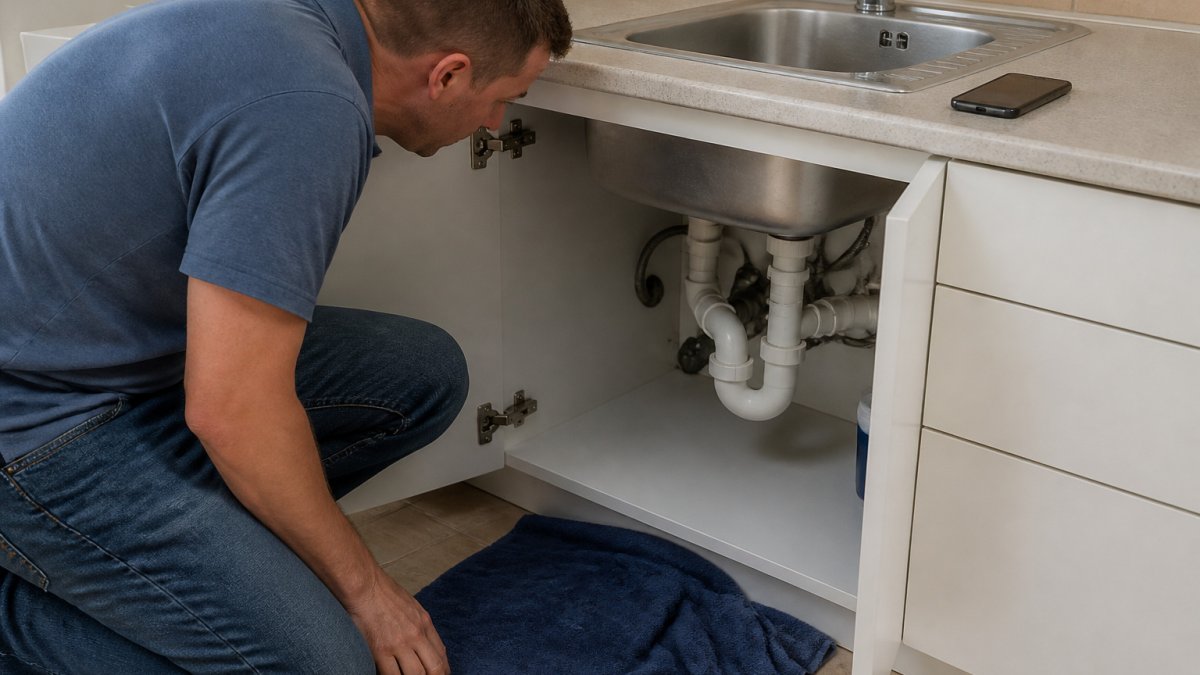
Start by isolating the water supply. Once that is done, you can deal with the rest of the house calmly.
Shutting Off Water and Gas Safely
Find the main isolation valve for your property. In most Perth homes it sits near the water meter at the front boundary or inside the house where the supply enters, often in the laundry or under the kitchen sink. Turn it clockwise until it stops. If you cannot find or move the main valve, turn off the individual valves under basins and toilets to limit the leak.
For gas, locate the meter and its isolation valve. Turn the valve a quarter turn so it sits across the pipe, which closes it. Do not attempt to repair gas fittings yourself. If you smell gas, open windows and doors on your way out, leave the building, and call for help from a safe distance.
Switch off electricity to any wet area at the switchboard if water is near power points. Keep people and pets clear of standing water until the power is confirmed off.
What Not to Do During a Leak or Burst
Avoid turning on any electrical switch or appliance in a flooded area. Do not use a plunger on a burst pipe, and do not force a stuck valve, as it can snap and make the leak worse. Avoid using chemical drain cleaners on a blockage that is backing up, since they can burn skin and damage pipes. Resist the urge to tape or patch a split pipe under pressure, because the joint will usually fail again under load.
Once the water is off, place buckets under drips and move valuable items out of the path of the water. A towel rolled against a doorway can slow spreading water while you wait.
Plumbing Emergency Checklist for Wanneroo Homes and Rentals
Keep this list somewhere easy to find, such as on the fridge or in your phone notes. It covers the steps that matter most before help arrives.
- Know the location of your main water isolation valve
- Know where your gas meter and its valve are
- Keep the phone number of your emergency plumber saved
- Note the property address and access details for the caller
- Photograph any visible damage for insurance purposes
- Clear floor space and move rugs or furniture away from water
- Switch off power at the board if water is near outlets
- Keep children and pets away from the affected area
Property managers and landlords should share this checklist with tenants and keep a record of the main valve locations for each rental. This speeds up response time and reduces the chance of tenant damage claims.
Emergency Plumber Cost and the After-Hours Callout Fee
Emergency plumbing costs depend on the work required, so the best way to understand them is to ask for a written quote before work begins. Ask the plumber to break the quote down into callout, labour, and parts, and to explain any after-hours charges and when they apply.
A2Z Plumbing does not publish fixed emergency prices. Contact us directly or visit our website for current rates and a quote before work begins, so the final invoice matches what you approved.
Before booking, ask three questions: What is the callout fee? What is the after-hours multiplier and when does it apply? Are parts and a second visit included or charged separately?
If you are comparing providers, the fairest comparison is the total quoted cost for the same job description, not the headline callout fee.
Call us today on 0421 799 060 →
Emergency plumbing costs depend on the work required, so these are the points to clarify before work begins.
| Question to ask | Why it matters | Where it applies |
|---|---|---|
| What is the callout fee? | Sets the starting cost | Before booking |
| What is the after-hours multiplier? | Shows when extra charges apply | Before booking |
| Are parts included? | Avoids surprise charges | Written quote |
| Is a second visit included? | Covers follow-up repairs | Written quote |
| Is the quote itemised? | Separates callout, labour and parts | Final invoice |
Emergency Plumbing Call-Out Fee: What Is Included
Ask what a callout covers and what will be charged separately, so you understand the full cost before any work starts. Our guide to avoiding hidden plumbing service fees explains which charges to look for on a quote. Request a written quote that lists the callout, labour, and parts separately.
What Happens During an Emergency Plumbing Visit
Knowing what to expect during an emergency visit helps you prepare and reduces the chance of misunderstandings about scope and cost. While every job is different, a typical emergency plumbing visit follows a predictable sequence.
1. Arrival and safety check. The plumber confirms the source of the problem and checks that water and gas are isolated. If water is near electrical fittings, the power should already be off at the switchboard. The plumber will confirm this before starting work.
2. Diagnosis. The plumber identifies the cause, a split pipe, a failed valve, a blocked drain, a hot water fault, or a gas leak, and explains what needs to happen. For concealed leaks, diagnosis may involve a moisture meter, thermal camera, or listening equipment. Ask what the diagnosis involves if it is not obvious.
3. Options and quote. You should be given the repair options and a clear price before work starts. For urgent make-safe work, the plumber may isolate the problem and schedule a permanent repair. Confirm whether the make-safe visit and the permanent repair are quoted separately.
4. Repair. Common emergency repairs include replacing a section of pipe, reseating or replacing a valve, clearing a blockage with a drain machine or jetter, resetting or replacing a hot water component, or isolating a gas leak. Parts may be carried on the van or sourced from a supplier; if sourcing is needed, ask for an expected timeframe.
5. Cleanup and check. The plumber should test the repair, check for leaks, and clean the work area. Ask for the work to be demonstrated before the plumber leaves, run the tap, flush the toilet, or check the hot water, so you can confirm the problem is resolved.
6. Documentation. You should receive an invoice itemising the callout, labour, and parts, plus any warranty details on workmanship and parts. Keep this for insurance and warranty purposes. If follow-up work is needed, ask for it in writing with a timeframe.
A good emergency visit ends with a tested repair, a clean area, and a written invoice that matches the quote you approved. If any of those are missing, ask before the plumber leaves.
For tenants and property managers, keep a record of the visit, date, time, plumber name, work done, and invoice, so the repair history is available for the landlord or insurer.
Booking Your 24/7 Emergency Plumber in Wanneroo Today
When something is leaking or a system has failed, speed matters. A2Z Plumbing provides 24/7 emergency availability across Perth’s northern suburbs. Our licensed team can attend urgent plumbing and gas issues, and a courtesy call is made before arrival.
If you are a tenant or property manager, book a 24/7 plumber in Wanneroo so the problem is handled without delay. Before we attend, you can also request a quote so you know what to expect. If a gas issue is suspected, get qualified help straight away through our gas plumber in Joondalup. Before hiring anyone for gas work, confirm a gas fitter licence step by step.
Call A2Z Plumbing today on 0421 799 060.
Frequently Asked Questions
What counts as a plumbing emergency?
A plumbing emergency is any problem that causes or threatens water damage, injury, or loss of essential service. Examples include a burst or leaking pipe that cannot be isolated, a blocked toilet that overflows, sewage backing up into the home, a hot water system leaking water, and any smell or sound of gas. If water is spreading, or you suspect a gas leak, call an emergency plumber straight away. Minor dripping taps or slow drains can usually wait until business hours.
Do emergency plumbers charge a call-out fee?
Many emergency plumbers charge a higher rate for after-hours, weekend, or public holiday callouts, and some apply an additional call-out fee. At A2Z Plumbing there is no call-out fee during office hours. Pricing depends on the work required, so ask for a written quote where possible.
Can I turn off my water supply during a plumbing emergency?
Yes. Locating and turning off the main isolation valve is usually the fastest way to stop water damage while you wait. The main valve is typically near the water meter at the front boundary or where the supply enters the home. Turn it clockwise until it stops. If you cannot find or operate the valve, or if the leak involves gas, do not attempt repairs yourself. Call an emergency plumber and keep the area safe.
When should I call an emergency plumber instead of waiting until morning?
Call an emergency plumber straight away if water is actively leaking or flooding, if sewage is backing up, if a hot water system is leaking heavily, or if you smell gas. These situations can cause structural damage or health risks within hours. Problems such as a slow drain, a dripping tap, or a running toilet can often wait for normal opening hours without causing further harm.
