
Quick Summary
A gas appliance safety check is a systematic inspection by a licensed gas fitter that confirms each appliance burns cleanly, vents correctly and is connected safely. Gas heaters and ducted heaters should generally be checked annually, while cooktops, ovens and hot water systems are typically checked every one to two years. Checks are also recommended before winter, after installation or repairs, and between rental tenancies.
- Inspections cover gas connections for leaks, burner flame, flue and ventilation, controls, and signs of heat damage or soot.
- Gas heaters and ducted heaters are typically checked annually, especially if heavily used.
- Cooktops, ovens and hot water systems in regular use are generally checked every one to two years.
- A yellow flame, flickering or soot around an appliance can signal incomplete combustion; switch it off and have it inspected.
- Confirm the gas fitter’s licence covers the work you need before any gas work begins.
Table of Contents
- Step-by-step inspection of each appliance
- Gas Appliance Inspection Intervals for Perth Homes and Rentals
- Gas Leak Warning Signs and What to Do Straight Away
- Gas Heater Safety Inspection: Soot, Flame Colour and Venting
- How to Verify a Gas Fitter Licence Before Work Starts
- Who Is Responsible for Gas Safety in WA Rentals and Owner-Occupied Homes
- Booking Your Next Gas Safety Check With A2Z Plumbing
- Frequently Asked Questions
What a Gas Appliance Safety Check Actually Covers
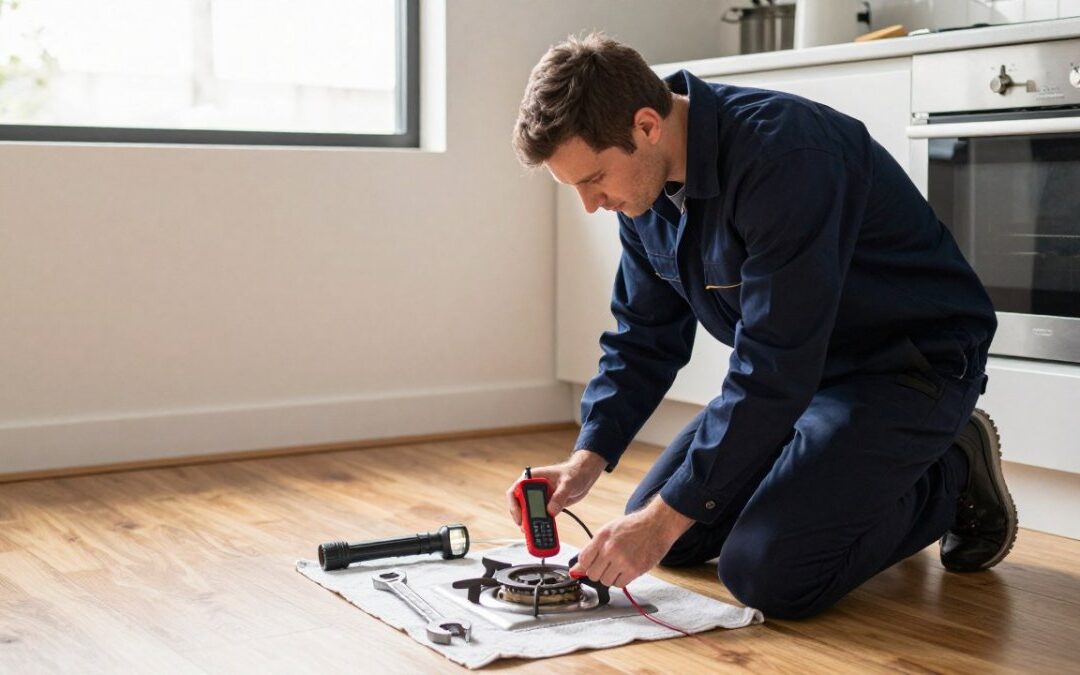
A gas appliance safety check is a systematic inspection by a licensed gas fitter. It confirms that each appliance is burning cleanly, venting correctly and connected safely. In Perth, most homeowners only think about one when something goes wrong, which is exactly the wrong time to find a fault.
Many households assume a check only means a quick look at the flame. A proper inspection covers far more, and it is worth knowing what to expect before you book.
Step-by-step inspection of each appliance
A technician typically works through each gas appliance in turn, because each type can fail in different ways.
For each appliance, the fitter generally checks:
- The gas supply connection and fittings for leaks
- The burner flame, including its colour and stability
- Ventilation and flue condition, so combustion gases leave the home safely
- Controls, thermostats and safety devices
- Signs of heat damage, corrosion or soot
Each step matters because a fault in one area can make another appliance dangerous. A blocked flue, for example, can cause a heater to produce carbon monoxide even when the flame looks normal.
Gas Appliance Inspection Intervals for Perth Homes and Rentals
How often an appliance should be inspected depends on its age, type and manufacturer instructions, but a practical schedule helps homeowners plan. Always start with the manufacturer’s recommended service schedule, which is usually printed in the owner’s manual or on the appliance itself.
A practical schedule by situation
A practical schedule for households often looks like this:
- Annually, gas heaters and ducted heaters, especially units used heavily through winter, and any appliance showing soot, yellow flame or unusual smell.
- Every one to two years, gas cooktops, ovens and hot water systems in regular use, or sooner if the manufacturer specifies.
- Before winter, a pre-season check on heaters is common because faults often surface on first use after months idle.
- After any renovation, repair or new installation, a check confirms the work is compliant and the appliance is safe to use.
- Between tenancies, rental properties often need a check before a new occupant moves in, since usage patterns and appliance condition can change.
Where there is no recorded service history, a check is a sensible starting point.
What the rules require in Western Australia
Gas safety and tenancy obligations for rental properties are set by Western Australian requirements. Check the current obligations with the relevant WA government agency before relying on a schedule. For owner-occupied homes, the homeowner is generally responsible for arranging inspections and acting on any faults identified.
Watch out: a manufacturer’s interval is a minimum, not a guarantee. An older appliance, a poorly ventilated room or a history of repairs can justify a shorter interval, and a fitter may recommend one after inspecting the unit.
The article’s schedule can be summarised at a glance, with the recommended timing for each appliance situation.
| Situation | Recommended timing | Note |
|---|---|---|
| Gas heaters and ducted heaters | Annually | Especially heavily used units, or any showing soot or yellow flame |
| Gas cooktops, ovens and hot water systems | Every one to two years | Sooner if the manufacturer specifies |
| Heaters before winter | Pre-season check | Faults often surface on first use after months idle |
| After renovation, repair or new installation | Check on completion | Confirms the work is compliant and safe |
| Between rental tenancies | Before new occupant moves in | Usage and condition can change |
Gas Leak Warning Signs and What to Do Straight Away
A gas leak is an emergency. The most common warning sign is a distinct rotten-egg smell, which is added to natural gas so leaks can be noticed. Other signs include a hissing sound near a fitting, dead plants around a gas line, or unexplained symptoms such as headaches and dizziness in people or pets when using a particular appliance.
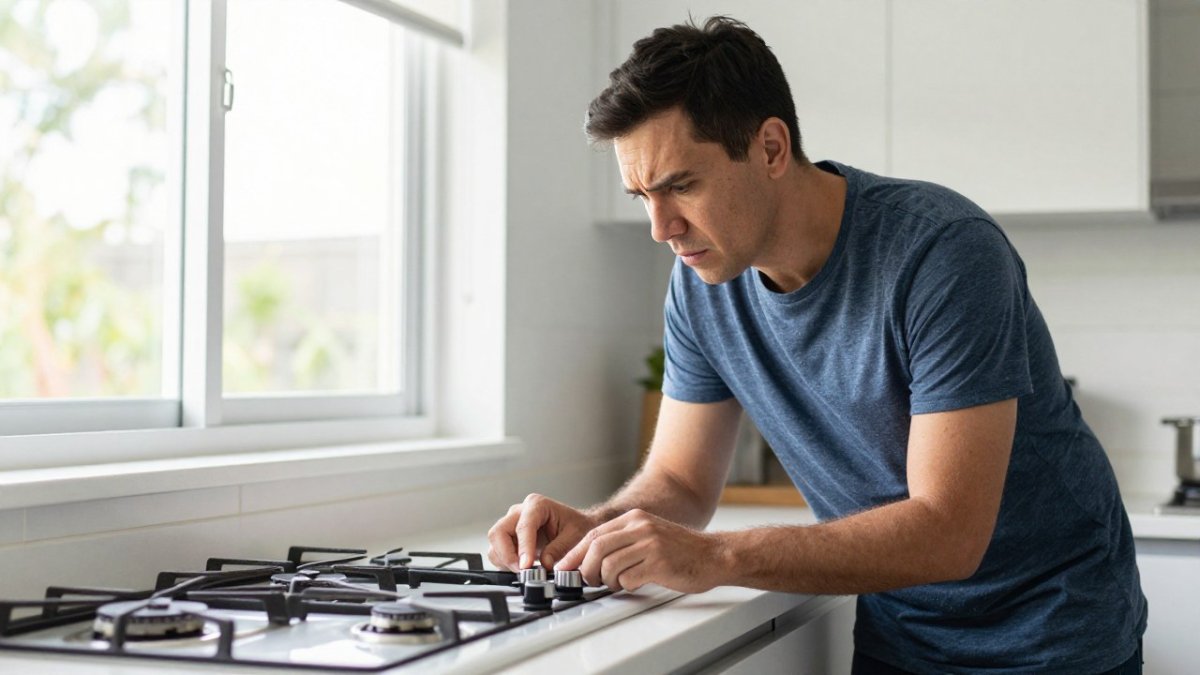
If you suspect a leak, act in this order:
- Turn off the gas supply at the meter or the appliance valve if you can do so safely.
- Open windows and doors to ventilate the area.
- Do not operate light switches, electrical appliances or open flames.
- Leave the property and call your gas emergency service or a licensed gas fitter from outside.
Never try to find a leak with a flame. Do not return inside until you have been told it is safe.
Gas Heater Safety Inspection: Soot, Flame Colour and Venting
Gas heaters give useful clues about their condition. A healthy flame is usually blue and steady. Yellow or orange flames, flickering, or dark soot marks around the appliance can point to incomplete combustion, which produces carbon monoxide.
Watch out: do not use soot or a yellow flame as a reason to keep running a heater. Switch it off and have it inspected first.
During an inspection, a technician looks at the flame, checks for soot, and confirms the flue and vents are clear and correctly fitted. They may also test combustion to measure whether the appliance is burning cleanly.
How to Verify a Gas Fitter Licence Before Work Starts
Before any gas work begins, confirm that the person doing it holds the correct licence. A licensed gas fitter should be able to show their licence and explain the scope of the work they are authorised to carry out. Checking a fitter’s licence and confirming the authorised scope of work are essential steps when hiring a licensed gas fitter, wherever the work is being done.
Ask for their licence details and check them with the relevant state authority. Make sure the licence covers the type of work you need, whether that is an inspection, a repair or a new installation. This step protects you as much as the fitter, because unlicensed work can affect insurance and safety.
Who Is Responsible for Gas Safety in WA Rentals and Owner-Occupied Homes
Responsibility for gas safety can differ between owner-occupied homes and rental properties. Check the current obligations with the relevant WA government agency, as these rules can change.
Booking Your Next Gas Safety Check With A2Z Plumbing
If it has been a while since your gas appliances were inspected, now is a good time to book a check. A2Z Plumbing is a family-owned business serving Perth’s northern suburbs, offering gas fitting services. For current prices or a quote, please contact us directly.
To arrange a gas appliance safety check, call us on 0421 799 060.
Frequently Asked Questions
What does a gas appliance safety check include?
A gas appliance safety check covers the appliance itself, its gas connection, flue or ventilation, and the surrounding area. A gas appliance safety check is carried out by a licensed gas fitter and covers the appliance, its gas connection, and its flue or ventilation. Contact A2Z Plumbing for details of what a check involves for your appliance.
How often should gas appliances be checked in Perth?
Gas appliances should be serviced and inspected regularly. Check your appliance’s manual for its recommended service interval, and book sooner if you notice changes in flame colour, unusual smells, or reduced heating performance.
How can I check whether a gas fitter is licensed?
Ask the gas fitter for their licence number and confirm it through the relevant Western Australian licensing body before any work begins. A licensed gas fitter should be able to show their licence and the class of work they are authorised to perform. Be cautious of anyone who cannot provide details or who suggests paying cash without a written quote. A2Z Plumbing holds an unrestricted plumbing contractor’s licence and a high-level gas fitter’s licence.
What should I do if I smell gas at home?
If you smell gas, leave the property immediately, avoid operating light switches, electrical appliances, or flames, and do not use your phone inside the building. Once you are safely outside, call your gas distributor’s emergency line or 000 if there is a fire or immediate danger. Do not attempt repairs yourself. Have the appliance and connection checked by a licensed gas fitter before the gas supply is restored and the appliance is used again.
